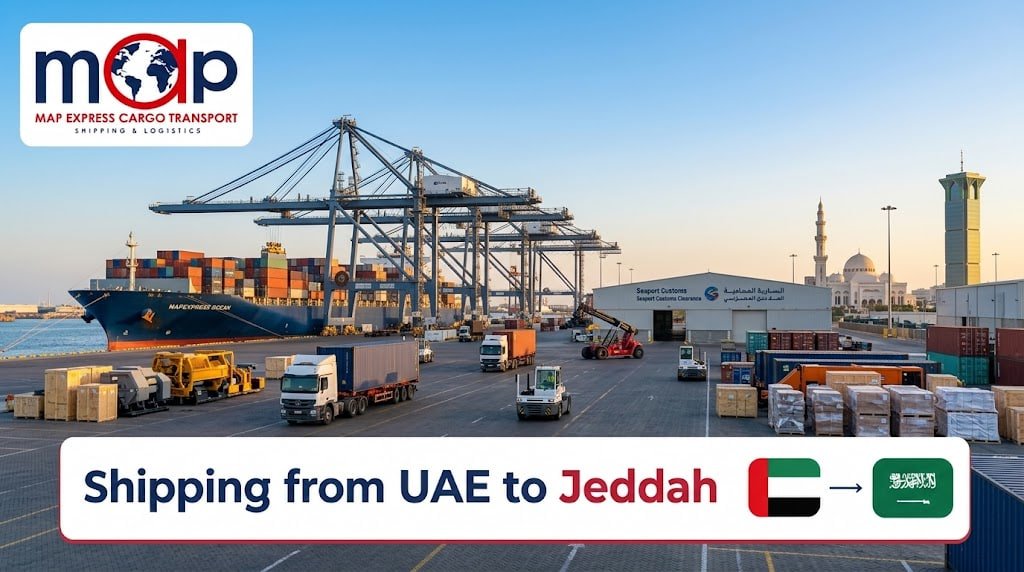

Shipping from Dubai to Canada: Freight Options, Documents, and Import Requirements
Shipping from Dubai to Canada involves choosing a suitable freight method, preparing accurate shipment information, and understanding the customs and import requirements that apply to your goods. Whether you are relocating, sending personal belongings and furniture, or transporting commercial cargo, planning ahead can help you organize the shipment and avoid preventable delays.
The right shipping arrangement depends on the type and volume of cargo, the Canadian destination, your preferred delivery schedule, and the services available for your shipment. This guide explains the main freight options, how to prepare personal and commercial goods, which documents may be required, and what to consider when planning delivery in Canada.
Looking for a Reliable Shipping Solution from the UAE?
MapExpress Cargo offers reliable air, sea, and land freight services for individuals and businesses, with support for customs procedures and international shipping requirements.
Shipping Services from Dubai to Canada
Shipments from Dubai to Canada may be transported by sea or air, depending on the cargo, destination, and available services. The best option depends on your priorities, such as shipment volume, delivery schedule, handling requirements, and overall budget.
Sea freight is often considered for larger shipments and household furniture, while air freight may be suitable for eligible cargo when speed is a priority. The final arrangement may also include pickup in Dubai, export documentation, customs coordination, and delivery to the Canadian destination, subject to service availability.
Before booking, identify the exact destination city in Canada. Shipping to Toronto, Vancouver, Montreal, Calgary, or another location may involve different arrival ports or airports and different onward transportation arrangements.
Sea Freight from Dubai to Canada
Sea freight may be suitable for furniture, household belongings, large consignments, and commercial cargo that does not require air transportation.
Depending on the available service, cargo may travel from a UAE port to a Canadian port, sometimes with transshipment along the route. The arrival port, sailing schedule, handling arrangements, and onward delivery options should be confirmed before booking.
Full Container Load (FCL)
Full Container Load may suit shipments that require a dedicated shipping container. It can be considered for larger household moves, substantial furniture shipments, business inventory, or eligible commercial goods.
Before selecting FCL, assess the total cargo volume and confirm the container size and loading requirements with the provider.
Less than Container Load (LCL)
Less than Container Load may be suitable when the shipment does not require an entire container and shared container space is available.
LCL can be considered for smaller furniture shipments, cartons of personal belongings, and eligible commercial cargo. The shipment may require additional consolidation and handling, and the overall schedule depends on the service arrangement.
When comparing FCL and LCL, ask about origin handling, consolidation, destination charges, customs procedures, and delivery from the Canadian port to the final address.
Air Freight from Dubai to Canada
Air freight may be considered for eligible shipments when a shorter transportation schedule is important. Depending on the carrier and service, it may be suitable for documents, smaller commercial consignments, spare parts, and selected personal effects.
Air freight charges can depend on actual weight and volumetric weight, which reflects the space a shipment occupies. Package dimensions and cargo characteristics can therefore affect the final price.
Before booking, confirm the accepted destination airport, cargo restrictions, packaging requirements, and whether the quotation includes airport handling, customs-related services, and final delivery.
For bulky furniture or large household shipments, compare air freight with sea freight to determine which option best matches your requirements.
Shipping Personal Belongings from Dubai to Canada
Individuals relocating to Canada or sending household belongings may need to transport clothing, books, kitchenware, bedding, decorative items, electronics, and other personal possessions.
Preparation should begin before packing. First, determine which items you intend to ship, whether they are new or used, and whether any goods may be subject to Canadian import restrictions.
Create a Detailed Inventory
Prepare a list of the items you plan to ship. Include the number of cartons, a description of the contents, and approximate dimensions and weight where available.
List large items individually, such as sofas, beds, wardrobes, dining tables, and appliances. Number each package and make sure the labels match the inventory.
An accurate inventory helps the logistics provider assess the shipment and may support customs declarations or other import documentation.
Pack Personal Items Carefully
Use sturdy cartons and suitable protective materials. Wrap fragile items individually, add cushioning to reduce movement, and avoid overloading boxes.
Label packages clearly and describe the contents accurately. Avoid vague descriptions such as “miscellaneous items” when a more specific description is available.
Keep passports, identification documents, essential medication, valuables, and other items you may need immediately separate from the shipment, where appropriate. Check carrier restrictions before including batteries, liquids, aerosols, or other potentially regulated items.
Check Canadian Import Requirements Before Shipping
Personal belongings entering Canada may be subject to customs declarations and specific import conditions. Requirements can depend on whether you are moving to Canada, visiting, sending goods to another person, or importing items for another purpose.
If you are relocating, review the Canada Border Services Agency’s current guidance on settlers’ effects and personal belongings. Eligibility for any duty or tax relief depends on the applicable rules and your circumstances; it should not be assumed automatically.
Prepare the relevant inventory and supporting documents before the shipment departs.
Furniture Shipping from Dubai to Canada
Furniture shipments require careful measurement, protective packaging, and coordination between pickup and delivery locations. Large items can occupy substantial cargo space and may need dismantling or special handling.
Measure Furniture Before Collection
Record the height, width, and depth of major furniture pieces. Identify oversized items and check whether they can be moved through doorways, corridors, elevators, and staircases at both locations.
Providing accurate measurements helps the logistics provider estimate cargo volume and assess loading requirements.
Protect Furniture Surfaces
Use suitable protective blankets, padded covers, corner guards, and wrapping materials according to the item’s construction. Protect glass components and detachable parts separately.
Ensure furniture is clean and dry before wrapping, particularly if it will be stored or transported for an extended period.
Consider Dismantling Where Appropriate
Beds, tables, wardrobes, and some shelving units may be easier to transport when dismantled. Keep screws and fittings in labelled bags and associate them with the relevant furniture.
Photograph complex furniture before dismantling to help with reassembly. Confirm whether dismantling, packing, loading, unloading, and reassembly are available and included in the quotation.
Prepare Appliances and Electronics
If your shipment includes household appliances or electronics, check the manufacturer’s instructions for transport preparation. Secure removable parts and protect screens or delicate surfaces where appropriate.
Electrical compatibility, product condition, and Canadian requirements may also be relevant when bringing certain appliances or electronics into Canada. Confirm any applicable restrictions before shipping.
Commercial Shipping from Dubai to Canada
Businesses shipping goods from Dubai to Canada should prepare accurate product information and confirm the Canadian import requirements before dispatch.
Commercial cargo may include packaged products, retail inventory, business supplies, equipment, spare parts, and other eligible goods. The documentation and import procedures depend on the product category, intended use, origin, and importer arrangements.
Prepare Accurate Commercial Documents
Depending on the shipment, the documents may include:
Commercial invoice: Identifies the goods, quantities, declared values, and parties involved.
Packing list: Provides package counts, descriptions, dimensions, and weights.
Transport document: Such as a bill of lading for sea freight or an air waybill for air freight.
Certificate of origin: May be required or requested for certain products or procedures.
Product permits or certificates: May apply to regulated goods.
Canadian importer information: Details required for the importer and customs processing.
Additional customs declarations: Depending on the goods and import arrangement.
Check that product descriptions, quantities, values, and party details are consistent across the documents.
Confirm Canadian Import Requirements
Canada has specific requirements for different product categories. Certain food products, plants, animal products, health-related goods, electronics, chemicals, and other regulated items may require permits, inspections, certifications, or additional procedures.
Do not assume that goods can be imported simply because they can be exported from the UAE. Confirm the applicable Canadian requirements and any restrictions before dispatch.
For commercial shipments, the Canadian importer or customs broker may need to provide information or complete specific procedures before the goods are released.
Documents Required for Shipping from Dubai to Canada
The documents required depend on the type of goods, shipment purpose, transportation method, and applicable export and import rules.
Depending on the circumstances, you may need:
Commercial invoice: Commonly used for commercial shipments and customs valuation.
Packing list: Details the shipment’s contents and package information.
Personal belongings inventory: Useful for household and relocation shipments and may be requested for customs procedures.
Bill of lading or air waybill: The transport document associated with the selected freight method.
Identification and relocation documents: May be required for certain personal shipments or import procedures.
Certificate of origin: Where required for the goods or the relevant customs process.
Import permits or product certificates: For goods subject to specific controls.
Customs declarations and supporting documents: As required by the relevant authorities.
Before shipping, confirm the exact document list for your cargo and circumstances. Keep copies of the relevant paperwork and ensure that the shipment details are accurate.
Customs Clearance for Shipments to Canada
Goods entering Canada must comply with applicable customs and import procedures. The process can vary according to the goods, their origin, declared value, intended use, and whether the shipment contains personal belongings or commercial products.
Customs procedures may involve reviewing documents, determining the applicable tariff classification, assessing declared value, checking eligibility for any applicable relief, and verifying whether permits or inspections are required.
Before dispatch:
Confirm the Canadian import requirements for your goods.
Prepare accurate descriptions, quantities, and values.
Verify the recipient or importer details.
Check whether the goods require permits, certificates, or other approvals.
Confirm who will arrange customs clearance and provide the required information.
Clarify how duties, taxes, brokerage, and other charges will be handled.
Customs duties and taxes may apply even when the shipment contains personal belongings. Any relief depends on the relevant Canadian rules and the circumstances of the importer. Confirm eligibility with the Canada Border Services Agency or a qualified customs professional.
For commercial cargo, clarify the responsibilities of the Canadian importer and customs broker before the goods are dispatched.
What Affects Shipping Costs from Dubai to Canada?
The cost of shipping from Dubai to Canada depends on cargo details, transportation method, route, handling requirements, and the services included in the quotation.
Weight, Dimensions, and Volume
The number of packages, total weight, dimensions, and overall volume affect cargo capacity and pricing.
Air freight charges may be calculated using chargeable weight, which can include volumetric weight. Sea freight costs may depend on shipment volume, container requirements, consolidation, and handling.
Measure furniture and cartons carefully before requesting a quote.
Freight Method and Destination
Sea and air freight have different pricing structures. The Canadian destination may also affect port or airport handling and onward transportation costs.
Compare the total cost of each suitable option, including the services required to move the cargo from the arrival point to the final address.
Pickup and Delivery Requirements
Collection from your address in Dubai and delivery to the recipient in Canada may affect the quotation. Building access, stairs, long carrying distances, unloading, and special equipment can add handling requirements.
Provide both addresses or the relevant cities when requesting an estimate.
Packing and Special Handling
Fragile items, oversized furniture, valuable goods, and products requiring specialized packaging may involve additional preparation or handling charges.
Explain these requirements before booking so they can be included in the proposed arrangement.
Customs, Taxes, and Brokerage
Duties, taxes, customs brokerage, inspections, port or airport fees, storage, and documentation charges may apply depending on the shipment.
Ask the provider to explain which costs are included in the freight quotation and which may be payable separately by the shipper or recipient.
How Long Does Shipping from Dubai to Canada Take?
The delivery schedule depends on the freight method, route, carrier availability, cargo readiness, documentation, customs processing, and final delivery arrangements.
Sea freight usually involves a longer transportation process than air freight, but the overall schedule also depends on sailing availability, consolidation, port handling, and onward delivery. Air freight timing can be affected by flight availability, cargo acceptance, handling, and customs clearance.
When requesting a quotation, provide your preferred collection and delivery timeframe. Ask for a current estimate based on the actual route and service rather than relying on a general transit-time figure.
Treat the estimated schedule as an estimate unless the agreed service terms explicitly provide otherwise.
Shipping from Dubai to Canada with MapExpress Cargo
MapExpress Cargo provides logistics and freight forwarding solutions from the UAE. The appropriate arrangement for a shipment to Canada depends on the cargo, destination, available services, and applicable requirements.
Whether you are sending personal belongings, furniture, or commercial cargo, preparing accurate shipment information in advance can help organize transportation and documentation.
Contact MapExpress Cargo to discuss your requirements and request a quotation based on the type of cargo, destination in Canada, and preferred delivery arrangements.