Sea Freight from UAE to Ethiopia: Container Shipping and Logistics Guide
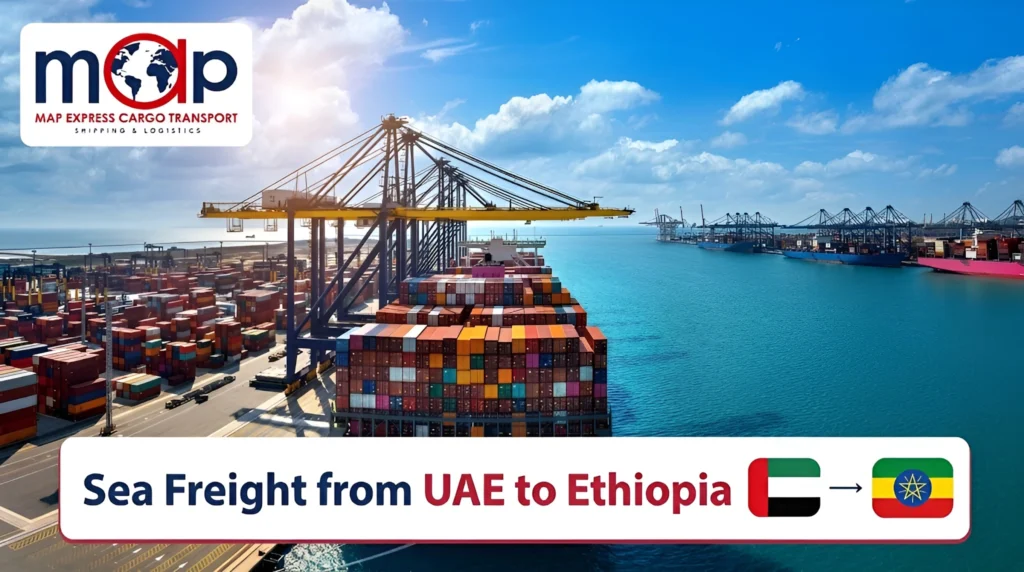
Sea freight from the UAE to Ethiopia can be a practical option for businesses, importers, and individuals shipping larger volumes of cargo. Whether you are transporting commercial goods, equipment, furniture, or other eligible shipments, careful planning helps coordinate ocean transportation, customs documentation, and onward delivery.
Ethiopia is a landlocked country, which means cargo destined for Ethiopia cannot arrive directly at an Ethiopian seaport. Sea freight shipments typically travel to a seaport in another country before continuing by road or through another suitable inland transportation arrangement to their destination in Ethiopia.
MapExpress Cargo provides logistics and freight forwarding solutions for different shipping requirements. The appropriate arrangement depends on cargo type, shipment volume, origin in the UAE, destination in Ethiopia, port routing, documentation, and the availability of onward transportation.
This guide explains the main considerations for sea freight from the UAE to Ethiopia, including container options, cargo preparation, routing, customs documentation, costs, and inland delivery planning.
Looking for a Reliable Shipping Solution from the UAE?
MapExpress Cargo offers reliable air, sea, and land freight services for individuals and businesses, with support for customs procedures and international shipping requirements.
How Does Sea Freight from the UAE to Ethiopia Work?
Shipping cargo by sea to Ethiopia involves more than the ocean journey. Because Ethiopia has no coastline, the shipment generally requires a combination of international sea transportation and inland logistics.
A typical shipment may involve the following stages:
Cargo preparation in the UAE: Confirm the goods, quantities, dimensions, weight, packaging, and shipping requirements.
Collection and export arrangements: Organize cargo collection or delivery to the designated departure facility and prepare the required export documents.
Ocean transportation: Move the cargo by sea to the selected port serving the intended destination in Ethiopia.
Arrival and port procedures: Complete the applicable arrival formalities and coordinate handling at the port.
Customs and transit arrangements: Confirm the procedures required for cargo entering Ethiopia through a transit country, including any applicable transit documentation.
Inland transportation: Arrange onward movement by road or another suitable method to the consignee’s location in Ethiopia.
Final delivery: Complete the agreed delivery arrangements once the necessary customs, transport, and release requirements have been met.
The precise sequence and responsibilities depend on the selected route, service scope, cargo type, and applicable regulations.
Container Shipping Options from the UAE to Ethiopia
The right container arrangement depends on the shipment’s volume, weight, dimensions, cargo characteristics, and budget.
Full Container Load (FCL)
Full Container Load shipping may be suitable when the cargo requires a dedicated container or occupies enough space to justify one.
Potential advantages include:
Dedicated container space for the shipment.
Greater control over how the cargo is packed and organized.
Suitability for many larger commercial consignments and substantial household shipments.
Easier planning for shipments containing multiple pallets or bulky goods.
Container availability and suitability depend on cargo dimensions, weight limits, handling requirements, and the service offered for the selected route.
Less than Container Load (LCL)
Less than Container Load shipping allows eligible cargo to share container space with shipments belonging to other customers.
LCL may be worth considering when you have a smaller shipment that does not require a full container.
Consider the following:
The shipment must meet the consolidation provider’s cargo acceptance requirements.
Additional handling and consolidation stages may apply.
Charges may depend on shipment volume, weight, handling, and other service-specific factors.
Cargo preparation and documentation must meet the provider’s requirements.
The most suitable option should be determined by comparing the total cost, cargo characteristics, expected schedule, and delivery arrangements rather than container size alone.
Which Ports Can Serve Sea Freight to Ethiopia?
Since Ethiopia is landlocked, the selected port is outside the country and must be connected to an onward transportation route.
Port of Djibouti
The Port of Djibouti is an important maritime gateway for Ethiopian trade. Cargo may be transported onward from Djibouti to destinations in Ethiopia using suitable inland logistics arrangements.
Whether this gateway is appropriate depends on the available shipping service, cargo type, transit requirements, and destination.
Other Potential Port Arrangements
Other regional ports may be considered in some circumstances, depending on the current route availability, commercial arrangements, cargo requirements, and applicable transit procedures.
A suitable route should not be assumed solely from the destination country. Confirm the proposed port, transit country, inland transportation arrangements, and responsibilities before booking.
Why Port Selection Matters
The arrival port can affect:
Ocean freight availability and pricing.
Port handling and terminal charges.
Transit documentation and customs procedures.
Inland transportation distance and cost.
Cargo handling and delivery coordination.
Overall shipment planning and estimated arrival schedule.
For this reason, a quotation should identify the proposed routing and clarify which port and inland services are included.
Preparing Cargo for Sea Freight
Proper preparation helps protect cargo during loading, ocean transportation, port handling, and inland movement.
Use Suitable Packaging
Choose packaging based on the cargo’s weight, shape, fragility, and exposure to handling conditions.
For general cargo, suitable cartons, pallets, crates, wrapping, and internal cushioning may be appropriate. Heavy or irregularly shaped items may require specialized packing or securing arrangements.
Protect Against Moisture and Movement
Sea freight shipments can be exposed to changing environmental conditions during transportation and storage. Use appropriate protective packaging for goods that may be affected by moisture, corrosion, or movement.
For sensitive cargo, discuss suitable packaging and handling requirements before dispatch.
Label Packages Clearly
Labels should identify packages consistently and support safe handling. Include package references and any necessary handling instructions, where appropriate.
Ensure package descriptions match the shipping documents and cargo inventory.
Record Cargo Details
Before booking, prepare accurate information about:
The type of goods being shipped.
Number of packages or pallets.
Dimensions and gross weight.
Cargo value where required.
Special handling requirements.
Any relevant restrictions, permits, or certificates.
Complete cargo details help the freight forwarder assess container suitability, handling needs, and routing options.
Commercial Cargo Shipping from the UAE to Ethiopia
Businesses shipping commercial cargo to Ethiopia should plan for transportation, customs requirements, and delivery to the receiving company or warehouse.
Depending on the goods, shipments may include eligible merchandise, machinery, spare parts, business supplies, building materials, and other commercial products.
Before dispatch, confirm that the goods are permitted for import and that any product-specific requirements have been addressed.
Commercial Invoice
The commercial invoice should accurately describe the goods, quantities, values, and relevant parties involved in the transaction.
Descriptions should be specific enough to identify the products. Avoid vague wording that could make customs assessment more difficult.
Packing List
A packing list provides details about packages, their contents, quantities, and shipment information. It should match the physical cargo and other shipping documents.
Cargo Classification
The applicable customs classification may affect import requirements, duties, taxes, and whether additional approvals are needed. Product classification should be confirmed using the relevant rules rather than guessed from a general description.
Delivery Coordination
Commercial importers should confirm who will handle customs clearance, port procedures, transit arrangements, inland transportation, and final delivery.
Clear responsibilities help reduce uncertainty when the shipment moves between different logistics providers or jurisdictions.
Documents Required for Sea Freight from the UAE to Ethiopia
Documentation depends on the cargo, export procedures, transit route, Ethiopian import requirements, and the parties involved.
Common documents and information may include:
Commercial invoice: Details of the goods and transaction.
Packing list: Package quantities, contents, weights, and other relevant information.
Bill of lading: The principal ocean transport document for the shipment.
Certificate of origin: Required for some shipments or when requested by the relevant authorities.
Customs declarations: Information required for export, transit, and import procedures.
Importer details: Information about the consignee and the party responsible for importing the goods.
Product permits or certificates: Additional documents may be needed for regulated goods.
Transit documentation: Documents required for the shipment to move through the transit country or countries.
Insurance documentation: Relevant when cargo insurance has been arranged.
Additional documents may be required depending on the product category, shipment value, destination, or current import rules.
Before dispatch, confirm the complete documentation checklist with the parties responsible for export, transit, and import procedures. Incomplete or inconsistent paperwork may lead to delays, additional charges, or requests for clarification.
Customs Clearance and Transit Requirements
Sea freight to Ethiopia may involve customs procedures in the export country, port handling and transit procedures in another country, and import clearance in Ethiopia.
Each stage has its own requirements, and the responsibilities may be divided between the shipper, importer, freight forwarder, customs broker, and inland transport provider.
UAE Export Procedures
The exporter must comply with the applicable UAE export requirements. Depending on the goods and transaction, this may involve export declarations, supporting documents, permits, or other formalities.
Transit Country Procedures
Because the cargo must pass through a port outside Ethiopia, the shipment may require transit arrangements before continuing inland.
The applicable procedures depend on the port, transit country, cargo, and transport arrangement. Confirm whether transit documentation, guarantees, or other formalities are required.
Ethiopian Import Clearance
The importer must comply with the applicable Ethiopian customs and import rules. Requirements may depend on the product, customs classification, declared value, importer status, and relevant regulatory approvals.
Before shipping, confirm:
Whether the goods are eligible for import.
Which licenses, permits, or certificates may be required.
The documents needed for customs assessment.
The applicable duties, taxes, and other charges.
Who is responsible for arranging import clearance.
Whether additional inspections or approvals may apply.
Do not assume that freight charges include customs clearance, duties, taxes, transit fees, or destination handling. Ask for a clear breakdown of the services and charges covered by the quotation.
Inland Transportation to Destinations in Ethiopia
After the ocean freight stage, the cargo must be transported from the selected regional port to its destination in Ethiopia.
The appropriate inland arrangement depends on the cargo, destination, road conditions, border procedures, delivery requirements, and available transport services.
Potential destinations may include Addis Ababa and other commercial or regional centers, subject to service availability.
What to Confirm Before Inland Delivery
The final delivery address and consignee contact details.
Whether transportation from the port to Ethiopia is included.
Which party will coordinate transit formalities.
Whether the cargo requires a particular vehicle or handling equipment.
Any weight, dimensions, or access restrictions affecting delivery.
Who is responsible for unloading and final placement.
The estimated inland schedule and any conditions that may affect it.
For large, heavy, or specialized cargo, confirm vehicle suitability and loading or unloading arrangements before dispatch.
How Much Does Sea Freight from the UAE to Ethiopia Cost?
The total cost depends on the shipment, chosen route, port arrangements, and services required. An accurate quotation should account for both ocean transportation and the additional stages involved in moving cargo to a landlocked destination.
Container Type and Cargo Volume
FCL pricing generally differs from LCL pricing. The number of containers, shipment volume, weight, and cargo dimensions can affect the cost.
Origin and Port Routing
The collection location in the UAE, departure port, available sailing arrangements, and selected arrival port may influence the freight charge.
Port and Handling Charges
Terminal handling, documentation, consolidation, storage, and other port-related charges may apply depending on the shipment and service arrangement.
Transit and Inland Transportation
The cost of moving cargo from the regional port to Ethiopia can be a significant part of the overall logistics budget. Confirm whether inland transportation and transit-related charges are included.
Customs and Regulatory Charges
Duties, taxes, customs brokerage, permits, inspections, and other regulatory or administrative charges may apply, depending on the goods and applicable rules.
Cargo Insurance and Special Handling
Insurance, specialized packaging, oversized cargo handling, and other additional services may affect the final price.
When comparing quotations, ask for a breakdown of ocean freight, port charges, transit arrangements, inland transportation, customs-related services, and any excluded fees.
Door-to-Door Sea Freight from the UAE to Ethiopia
A door-to-door arrangement may coordinate multiple stages of the shipment, from collection in the UAE to delivery at the agreed destination in Ethiopia, where the service is available.
Depending on the quotation, the arrangement may cover:
Cargo collection or delivery to the departure facility.
Export preparation and documentation coordination.
Ocean freight to the selected regional port.
Port handling and the agreed transit arrangements.
Inland transportation to Ethiopia.
Coordination of customs-related procedures.
Final delivery after the necessary release requirements have been met.
Before confirming the booking, clarify whether customs brokerage, import duties, taxes, storage, unloading, and other destination charges are included or excluded.
A door-to-door description does not automatically mean every charge or customs responsibility is covered. The written quotation should clearly define the service scope and the responsibilities of each party.
How Long Does Sea Freight to Ethiopia Take?
The overall shipping time depends on the ocean route, vessel schedule, selected port, cargo readiness, port handling, transit procedures, customs processing, and inland delivery.
The ocean journey is only one part of the complete shipment. Cargo must also be handled at the arrival port and transported onward to Ethiopia.
Factors that may affect the schedule include:
Vessel availability and sailing frequency.
Transshipment or routing arrangements.
Port congestion and handling times.
Completeness of export, transit, and import documentation.
Customs inspections or requests for additional information.
Inland transportation availability and border procedures.
Final delivery access and unloading arrangements.
Request an estimated schedule for the specific route and ask whether it covers port-to-port transportation or the complete journey to the destination in Ethiopia. Any estimate should be treated as subject to the conditions of the agreed service.
Tips for a Successful Sea Freight Shipment to Ethiopia
Use the following checklist when preparing your cargo:
Confirm the shipment is permitted for export, transit, and import.
Provide accurate descriptions, weights, dimensions, and values.
Choose the appropriate container or consolidation option.
Use suitable packaging for ocean and inland transportation.
Prepare the commercial invoice and packing list where required.
Confirm the bill of lading details before finalization.
Identify the proposed arrival port and onward transport arrangement.
Verify transit documentation requirements.
Confirm Ethiopian import requirements with the responsible parties.
Clarify customs responsibilities, duties, taxes, and destination charges.
Request an estimated schedule for the complete route.
Check whether cargo insurance is appropriate for the shipment.
Good preparation helps the parties involved coordinate the ocean freight and inland transportation stages more efficiently.