Commercial Shipping from UAE to Qatar: Freight Options and Costs
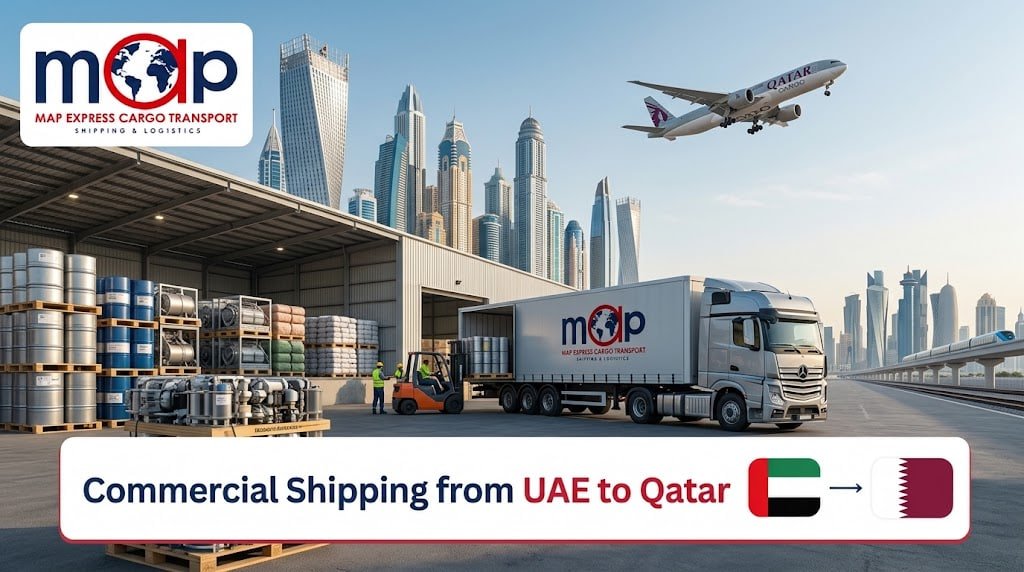
Commercial shipping from the UAE to Qatar helps businesses transport eligible goods, products, equipment, and supplies to customers, distributors, warehouses, and business locations. Choosing a suitable freight method requires evaluating the shipment size, cargo type, delivery requirements, documentation, and total transportation cost.
MapExpress Cargo provides logistics and freight forwarding solutions from the UAE. The right shipping arrangement depends on your commercial cargo and the transportation services available for your route.
This guide explains the main freight options for commercial shipments to Qatar, the factors that influence shipping costs, and the documentation and customs considerations businesses should review before dispatch.
Looking for a Reliable Shipping Solution from the UAE?
MapExpress Cargo offers reliable air, sea, and land freight services for individuals and businesses, with support for customs procedures and international shipping requirements.
Commercial Freight Options from UAE to Qatar
Businesses can consider road, sea, or air freight depending on the nature of their goods, shipment volume, delivery priorities, and available services.
Road Freight from UAE to Qatar
Road freight may be suitable for eligible commercial shipments transported between the UAE and Qatar. Businesses may consider it for packaged products, supplies, selected equipment, spare parts, and other cargo that can be transported by road.
When evaluating road freight, consider the collection location, final delivery address, cargo dimensions, weight, loading requirements, and applicable border procedures.
Road transportation may also be considered for shipments requiring delivery to a warehouse, retail location, office, or other commercial destination. Confirm whether the requested arrangement includes collection, loading, border documentation support, customs coordination, and final delivery.
Sea Freight from UAE to Qatar
Sea freight may be suitable for larger commercial shipments, bulky goods, and cargo that can be transported in containers. Depending on the shipment volume and available arrangements, businesses may consider Full Container Load (FCL) or Less than Container Load (LCL) services.
Full Container Load (FCL) may be appropriate when a business has enough cargo to justify reserving a container for its shipment.
Less than Container Load (LCL) may be considered when the shipment does not require an entire container and shared container space is available.
Sea freight planning should account for cargo volume, packaging, port handling, documentation, and any onward transportation required after arrival. Confirm the available route and the complete cost breakdown before booking.
Air Freight from UAE to Qatar
Air freight may be considered for urgent commercial shipments, smaller consignments, documents, spare parts, and other eligible goods for which transportation speed is an important factor.
Air freight charges are influenced by the actual weight and volumetric weight of the cargo, along with package dimensions, cargo characteristics, handling requirements, and applicable airline conditions.
Before booking, businesses should confirm that the goods are accepted for air transportation and that any required supporting documents or approvals are available.
What Types of Commercial Goods Can Be Shipped to Qatar?
The goods a business can ship depend on the applicable import regulations, product category, documentation, and transportation service.
Commercial shipments may include:
Packaged products: Eligible goods prepared for wholesale, retail, or distribution.
Business supplies: Consumables, office supplies, and other goods used in business operations.
Machinery and equipment: Eligible equipment, subject to size, weight, handling, and import requirements.
Spare parts: Components intended for maintenance, repair, or business operations.
Retail and wholesale inventory: Products transported to warehouses, shops, distributors, or customers.
Industrial materials: Eligible materials that meet applicable safety, transport, and import conditions.
Some products may require specific permits, certificates, inspections, or additional handling. Restricted or regulated goods should be checked before transportation is arranged.
Businesses should provide accurate product descriptions rather than relying on broad terms such as “general goods.” Clear descriptions help the logistics provider assess the shipment and identify potential documentation requirements.
How to Choose the Right Freight Method for Your Business
The most suitable freight method depends on the priorities of your shipment rather than a single factor.
When comparing options, consider the following:
Shipment size and volume: Larger consignments may be suitable for road or sea freight, depending on the route and cargo characteristics. Smaller consignments may be candidates for air freight or shared cargo arrangements.
Delivery priorities: If the shipment has a strict delivery deadline, compare the estimated transit schedule and handling time for each available method.
Cargo characteristics: Fragile, oversized, heavy, or regulated goods may require special handling or a specific transportation arrangement.
Delivery location: A shipment intended for a warehouse near a major transport hub may require different arrangements from one delivered to a business premises in another part of Qatar.
Total logistics cost: Compare the complete cost, including collection, freight, handling, customs-related charges, and final delivery where applicable.
Requesting a quotation based on the same cargo details and delivery requirements makes it easier to evaluate the available alternatives.
What Affects Commercial Shipping Costs from UAE to Qatar?
Commercial shipping costs vary according to the cargo, freight method, route, service scope, and applicable charges. Businesses should assess the full shipment cost rather than comparing freight rates alone.
Cargo Weight and Volume
The shipment’s weight and dimensions influence the transport capacity required. For air freight, volumetric weight may affect the chargeable weight. For sea freight, the cargo volume and container requirements are important. Road freight costs may also depend on vehicle capacity, cargo dimensions, and loading requirements.
Providing accurate measurements helps reduce the risk of quotation changes caused by incorrect shipment information.
Freight Method and Route
Road, sea, and air freight have different pricing structures. The available route, transport capacity, handling arrangements, and destination requirements can affect the overall quotation.
Compare the options available for your particular cargo rather than assuming one method will always be the least expensive.
Pickup, Handling, and Delivery
The pickup location in the UAE and the final delivery address in Qatar can affect the cost. Additional requirements, such as special loading equipment, difficult site access, or delivery to a specific warehouse, may also influence the quotation.
Confirm whether loading, unloading, local transportation, and other handling services are included.
Packaging and Special Handling
Some commercial goods require reinforced packaging, palletization, protective materials, or special handling arrangements. Oversized cargo and goods that need particular loading conditions may involve additional costs.
Share the dimensions, packaging details, and any handling instructions before requesting a quote.
Customs and Documentation Charges
Commercial shipments may involve customs duties, taxes, inspections, permits, certificates, or document-related fees, depending on the goods and applicable requirements.
Clarify which charges are included in the freight quotation and which may be payable separately by the shipper or recipient.
Additional Logistics Services
Storage, cargo preparation, special collection arrangements, and onward delivery may affect the final cost when required and available.
Ask for an itemized quotation where possible so your business can understand the services covered and identify any potential additional charges.
Documents Required for Commercial Shipping to Qatar
Commercial shipments need accurate documentation to support transportation and applicable customs procedures. The specific requirements depend on the goods, their origin and classification, the transportation method, and current import regulations.
Documents that may be required include:
Commercial invoice: Identifies the seller and buyer, describes the goods, and records quantities and declared values.
Packing list: Provides package counts, contents, weights, and dimensions.
Certificate of origin: May be required to establish the origin of the goods, depending on the applicable import procedure.
Transport document: Such as a road consignment note, bill of lading, or air waybill, depending on the selected freight method.
Product certificates or conformity documents: May be required for particular product categories.
Import permits or approvals: May apply to regulated or controlled goods.
Additional supporting records: Customs authorities or other relevant parties may request further documentation depending on the shipment.
Businesses should ensure that product descriptions, quantities, values, and other shipment details are consistent across the relevant documents.
Before dispatch, confirm the exact requirements for the goods being imported into Qatar. Do not assume that the same documentation applies to every product category or commercial shipment.
Customs Clearance Considerations for Commercial Shipments
Customs clearance is an important part of transporting commercial goods from the UAE to Qatar. Import procedures may involve reviewing the shipment documentation, identifying the goods, checking their classification and declared value, and confirming whether any duties, taxes, permits, or inspections apply.
The requirements can vary according to the product type, country of origin, intended use, and applicable regulations.
To prepare for customs processing, businesses should:
Use clear and accurate descriptions of the goods.
Ensure that quantities and declared values match the supporting documents.
Confirm the appropriate goods classification where required.
Check whether permits, certificates, or product approvals are necessary.
Verify the importer or recipient information.
Confirm who is responsible for coordinating customs clearance.
Understand which duties, taxes, and other charges may apply.
Some shipments may be subject to additional review or inspection. Missing information, inconsistent documentation, or unverified import requirements can result in delays or additional administrative work.
Businesses should confirm the current rules with the relevant authorities or a qualified customs professional before shipping.
Planning Commercial Deliveries to Qatar
Transportation planning should cover more than the journey itself. Businesses may need to coordinate cargo readiness, collection, documentation, receiving arrangements, and delivery to the final destination.
Before dispatch, confirm:
The collection address and the date the cargo will be ready.
The final delivery location in Qatar.
The number of packages, dimensions, and total weight.
Whether pallets, special loading equipment, or other handling arrangements are required.
The availability of the recipient to accept the delivery.
Any warehouse receiving requirements or delivery time restrictions.
The documents and contact details needed by the relevant parties.
For regular commercial shipments, maintaining a consistent process for preparing invoices, packing lists, and cargo measurements can make repeat bookings easier to manage.
If your business needs door-to-door transportation, confirm which stages are included. Pickup, freight transportation, customs coordination, customs clearance, unloading, and final delivery should be clearly defined in the service arrangement.
How to Reduce Avoidable Shipping Costs
Although freight prices depend on market conditions and shipment requirements, businesses can improve shipment planning by providing accurate information and preparing cargo properly.
Consolidate Shipments Where Practical
If several orders are ready for dispatch around the same time, ask whether combining them is suitable. Consolidation may improve space utilization, depending on the cargo, delivery deadlines, and available freight arrangements.
However, combining shipments is not always the best option when orders have different delivery priorities or documentation requirements.
Measure Cargo Before Requesting a Quote
Record the weight and dimensions of packages, pallets, and oversized items as accurately as possible. Incomplete or incorrect measurements can lead to revised charges after the cargo is assessed.
Prepare Documentation Early
Review invoices, packing lists, permits, and other required records before the planned dispatch date. Confirm whether the importer or recipient must provide additional information.
Select Packaging Appropriate to the Cargo
Use packaging that protects the goods while making efficient use of transport space. Avoid unnecessary empty space in cartons, but do not compromise protection or exceed safe package-handling limits.
Clarify the Complete Cost
Ask whether the quotation includes pickup, freight, handling, customs-related charges, and delivery. Confirm any excluded services or possible additional fees before approving the booking.
Match the Freight Method to the Shipment
Consider cargo volume, urgency, destination, and handling needs together. A freight method that appears inexpensive at first may not be the most suitable when onward transportation and other charges are included.
Commercial Shipping from UAE to Qatar with MapExpress Cargo
MapExpress Cargo provides logistics and freight forwarding solutions for businesses planning shipments from the UAE. The appropriate arrangement depends on the type of commercial cargo, the collection and delivery locations, and the services available for the shipment.
To discuss a commercial shipment, prepare the following information:
A description of the products or goods.
The number of packages, pallets, or shipping units.
The total weight and dimensions.
The pickup location in the UAE.
The delivery city or address in Qatar.
The preferred shipping schedule.
Any permits, handling requirements, or special delivery instructions.
Whether you need collection, packing, transportation, or delivery services.
These details help establish the scope of the shipment and allow suitable available freight options to be considered.
Contact MapExpress Cargo to discuss your commercial shipping requirements and request a quotation based on your cargo and delivery needs.